

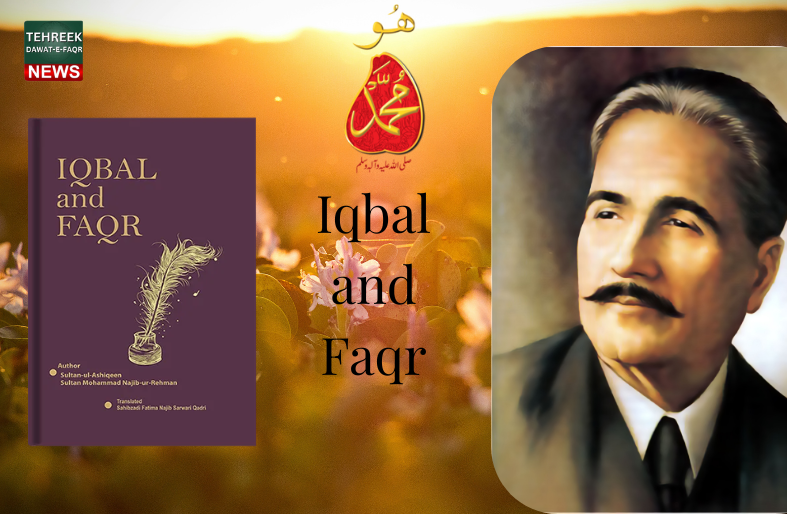
Iqbal and Faqr share a profound and inseparable connection that most Muslims have never truly explored. Allama Iqbal — celebrated across the world as the Poet of the East — was not merely a political thinker or literary genius. He was a deeply spiritual soul whose entire philosophy pointed toward one destination: the purification of innerself and the rediscovery of Faqr — the Divine path that Prophet Mohammad ﷺ declared his greatest pride. Two extraordinary books by Sultan-ul-Ashiqeen, Hazrat Sakhi Sultan Mohammad Najib-ur-Rehman Madzillah ul Aqdas — Iqbal and Faqr (Faqr-e-Iqbal) and Purification of Innerself in Sufism (Nafs Kay Nasoor) — together unlock this forgotten secret for the Muslim umma of today.
Iqbal and Faqr: The True Message Behind Khudi
When Iqbal wrote about khudi — self — most readers understood it as confidence or national identity. But the book Iqbal and Faqr reveals the deeper spiritual reality. Iqbal’s concept of khudi was not about ego or pride. It was about the discovery of the Divine spark within — the recognition of the soul’s true origin in Allah. Iqbal himself wrote that the treasure Muslims have lost is Faqr. He declared openly: “Since the time Muslims lost Faqr, they were neither entrusted with worldly imperialism nor spiritual wealth.”
Iqbal saw the Muslim decline not as a political problem but as a spiritual one. The ummah had abandoned the path of the perfect spiritual guide and surrendered to the slavery of the nafs — the inner baser self. His poetry was not merely a call to political awakening but a cry for spiritual resurrection through Faqr.
Purification of Innerself: The Disease Iqbal Diagnosed
The book Purification of Innerself in Sufism provides the precise diagnosis that Iqbal’s poetry pointed toward. Sultan-ul-Ashiqeen identifies fifteen devastating diseases of the nafs that silently destroy a Muslim’s spiritual life from within. Arrogance makes a person blind to truth. Jealousy burns away good deeds. Pretence hollows out worship. Greed enslaves the heart to the world. Narcissism severs the connection between the servant and his Lord.
Iqbal grieved over exactly these diseases when he wrote about the Muslim of his time — performing prayers outwardly while the heart remained imprisoned by the very diseases that Faqr was meant to cure. The shaheen — the falcon — in Iqbal’s poetry is not merely a symbol of ambition. It is the symbol of the seeker of Allah who has freed himself from the cage of nafs and soars toward Divine closeness.
Purification of Innerself Is the Gateway to Faqr
Both books together establish a complete spiritual roadmap. Purification of innerself is not a destination — it is the gateway. When the diseases of arrogance, jealousy, greed and pretence are eliminated through the invocation of Ism-e-Allah Zaat under the guidance of the Murshid Kamil, the heart begins to shine with Divine light. This is the state Iqbal longed for — the state where the seeker’s khudi dissolves into the Divine Essence and he discovers that true selfhood is found only in the annihilation of the false self.
Why This Message Is Urgent Today
Iqbal warned over a century ago that Muslims were spiritually hollow — performing the rituals of Islam while abandoning its soul. That warning is more urgent today than ever. Millions fast, pray and perform Hajj — yet the heart remains locked in the prison of nafs. The diseases of the innerself have never been more widespread. The only cure, as both Sultan-ul-Ashiqeen’s books make clear, is to find the living Murshid Kamil of the era and walk the path of Faqr through sincere purification of innerself.
The Living Guide of the Era
Iqbal yearned for the return of the perfect spiritual guide who could revive Faqr in the Muslim umma. That living guide today is Sultan-ul-Ashiqeen, Hazrat Sakhi Sultan Mohammad Najib-ur-Rehman Madzillah ul Aqdas — the 31st Shaikh of the Sarwari Qadri order. Under his blessed guidance, thousands of sincere seekers have walked the path of purification of innerself and discovered the living reality of Faqr that Iqbal spent his life describing in poetry.
Tehreek Dawat-e-Faqr invites all those who carry Iqbal’s longing in their hearts to take the next step at Masjid e Zahra, Village Rangeel Pur Sharif, Sundar Adda, Multan Road, Lahore.
TDF News | Tehreek Dawat-e-Faqr 🌐 news.tehreekdawatefaqr.com
